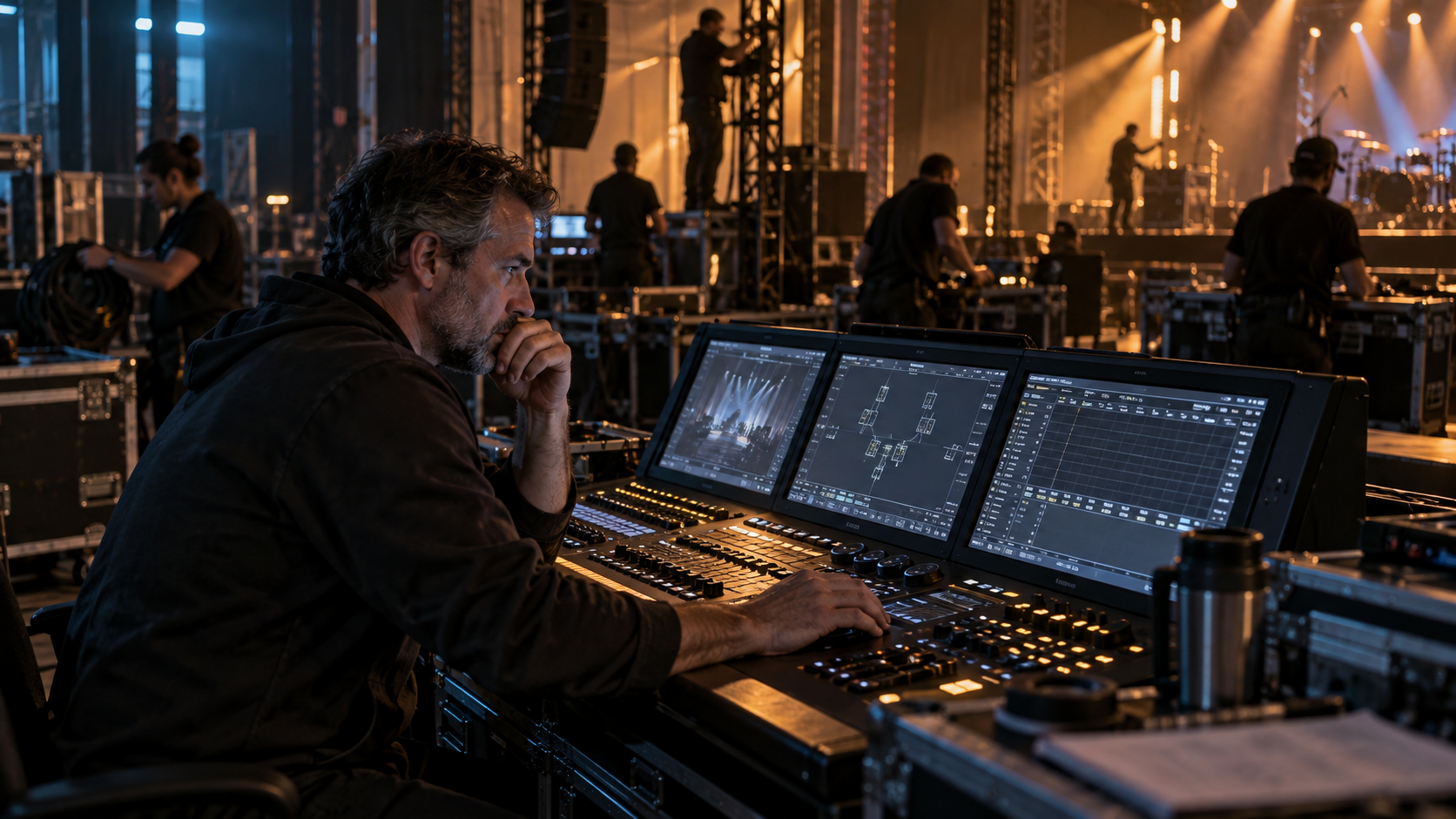
A rate fits inside a spreadsheet cell. Experience, risk, and the hours a decision can save do not fit so easily. That is why comparing professionals solely by price gives a precise answer to the wrong question.
How to compare proposals
A useful comparison separates preparation, working day, travel, tools, deliverables, and support. It also clarifies limits: how many hours are included, what happens if the scope changes, and who takes responsibility for critical decisions. Reducing everything to a day rate merely postpones those differences.
An experienced professional may recognize that a request belongs to another department, reject an unsafe solution, or protect the schedule with an alternative. That may not produce a billable line, but it prevents waiting and rework. In events, some decisions concentrate the cost of the entire room.
The visible cost
When two quotations both describe “one technical day,” they appear to offer the same thing. But a day can include very different levels of preparation, autonomy, tools, documentation, and responsiveness.
The lower figure reduces one line. The outcome depends on everything else: load-in duration, rehearsal, team hours, rentals, and later changes.
The domino effect
An hour lost to an incorrect patch does not belong only to the programmer. It can stop stage, video, production, and performers. Five people waiting turn one cheap hour into five expensive ones.
There is also deferred cost: show files nobody can continue, unverified backups, or missing documentation that forces the next date to rebuild the project.
Experience does not mean infallibility
A high rate does not guarantee a good result. Useful experience is visible in the method: specific questions, clear boundaries, communication, and understandable deliverables.
Compare scope and responsibility. Who prepares? Who provides tools? What is delivered? How are overtime and changes handled? Two prices stop looking comparable once those answers are explained.
A common example
A lower-cost technician needs constant help with a network they do not understand. Another charges more, spots an incorrect configuration before connecting, and avoids rebuilding the system. The second has not worked less; they have compressed years of learning into a decision that took minutes.
Value is not about looking busy. It is about reducing uncertainty without transferring it to the rest of the team.
Choose for the project
Not every production needs maximum specialization. Over-specifying also costs money. A simple job can be a perfect opportunity for someone with less experience and a sound method.
A professional decision relates complexity, consequences of failure, required autonomy, and budget. Saving means removing cost that adds no value, not removing the capacity that protected the project.
The total price
Before choosing, imagine the entire day: arrival, configuration, changes, rehearsal, show, handover, and the next date. How much risk does each option assume?
The best rate is not necessarily the highest or the lowest. It is the one that achieves the result with a reasonable level of risk. A cheap figure stops being cheap when it makes you pay twice, while an expensive one may be excessive if it provides capabilities the project will never use.